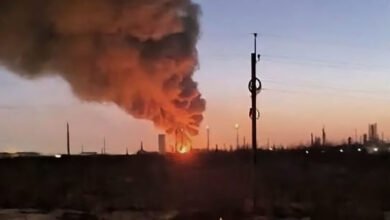
Ukraine built the world’s only defense against mass drone attacks. Now it’s rebuilding it—mid-war

(function(w,q){w[q]=w[q]||[];w[q].push([“_mgc.load”])})(window,”_mgq”);
Ukraine will be restructuring how its air defense is organized, President Volodymyr Zelenskyy said in a statement on 11 February.
Russia’s ongoing air terror campaign is causing prolonged and repeated energy crises throughout the country, during one of the coldest winters in recent years. Meanwhile, Ukraine’s interception rate of Russian drones and missiles has declined throughout 2025.
No country has ever had to defend its territory against hundreds of drones, night after night, for years. While the interception rate has not fallen below 80%, the drones and missiles that get through wreak havoc on civilian infrastructure. Kyiv is looking to improve and stay ahead of the growing threat.
“Many changes are currently taking place in the operation of air defense,” Zelenskyy wrote. “In some regions, the way teams work is being completely rebuilt — interceptors, mobile fire groups, the entire component of small-scale air defense.”
The president said the decision followed a “long conversation with the Commander in Chief, the Chief of the General Staff, and the Defense Minister.” Zelenskyy’s announcement was light on details, saying it’s too early to publicize them.
Even so, it is possible to identify some of the ways in which air defense can stand to be improved, based on publicly available data and interviews with military sources and analysts. These ways include:
- Reducing the use of expensive tools like fighter jets and advanced surface-to-air missiles on cheaper weapons like Shaheds and Shahed-like drones.
- Reducing the rigid vertical hierarchies still present in Ukraine’s air defense commands, and enabling more autonomy for units.
- Improving coordination between different layers of air defense, as well as forces responsible for radar detection and electronic warfare.
- Improving mobile air defense teams by rethinking how they are trained and deployed to hunt Russian drones.
“All of the above does not imply radical reform or restructuring,” Viktor Kevliuk, a battlefield analyst and retired Ukrainian colonel, told Euromaidan Press.
“We should be talking about developing new forms and methods of managing and interacting with existing air defense forces and weapons.”
Ukraine’s expert community has known about ways to improve air defense for some time, but the military “tried not to react to these suggestions,” according to Kostyantyn Kryvolap, a former aviation test engineer at the Antonov Design Bureau. His words echo those of a senior master sergeant, who complained of resistance to change among military leaders.
However, “Ukraine is facing something that nobody else has faced before,” said Marc DeVore, a military scholar at St. Andrews College in the UK.
“When we’re talking about the need for reforms and breaking down administrative barriers, I think all of that is real, but that has to be placed against the fact that Ukraine is facing a very new challenge set.”
Art vs Science
Ukraine has a robust system for dealing with traditional threats from the air, such as missiles and manned aircraft. Even against ballistic threats, which require foreign systems like Patriots to shoot down, Ukraine’s air defense troops know what to do and how to do it, provided they have the tools.
Mass drone strikes have upended that dynamic. Even after three years of dealing with Shaheds, shooting them down remains more an art than a science, according to Kryvolap.
Shahed interception begins once these drones cross the front line into Ukrainian-held territory. Air defense troops positioned close to the front can take some of them down. But the ones that get through require other solutions.
These include helicopters, which are in limited supply, and mobile fire teams, which aren’t actually very mobile in many cases.
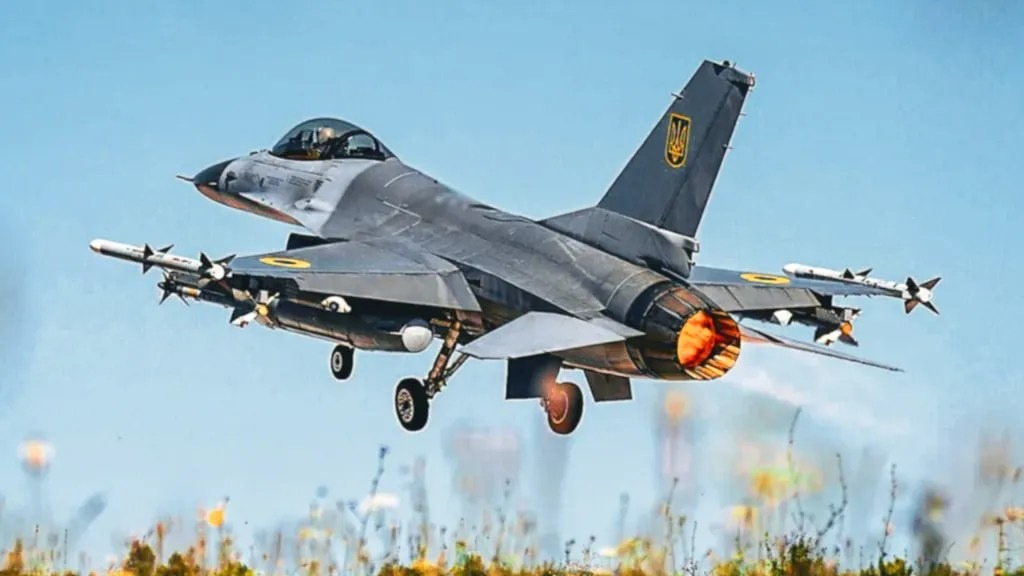
Ukraine has ways to compensate by putting planes in the sky and using surface-to-air missiles, which it does regularly. However, in most cases, this is not cost-effective against mass drone strikes, where a significant percentage are decoys made of styrofoam.
“What I hear the most frustration about, when speaking to supporters of Ukraine, is the use of manned jets… with quite expensive air-to-air missiles to intercept Shaheds,” DeVore said, calling this method “definitely wasteful.”
“There are much cheaper ways of bringing down things like Shaheds than with jets.”
Another problem with jets is that the crews on the ground sometimes don’t get cleared to shoot at Shaheds because friendly aircraft are in the sky and friendly fire is too likely.
Mobile fire teams
When it comes to improving the potential of air defense, Kevliuk said that “the unplowed field is the mobile fire groups, which bear the main burden of combating strike UAVs and a huge part of the fight against cruise missiles.”
“Here there are full prospects for reorganization and, above all, training personnel in the skillful use of machine guns day and night.”
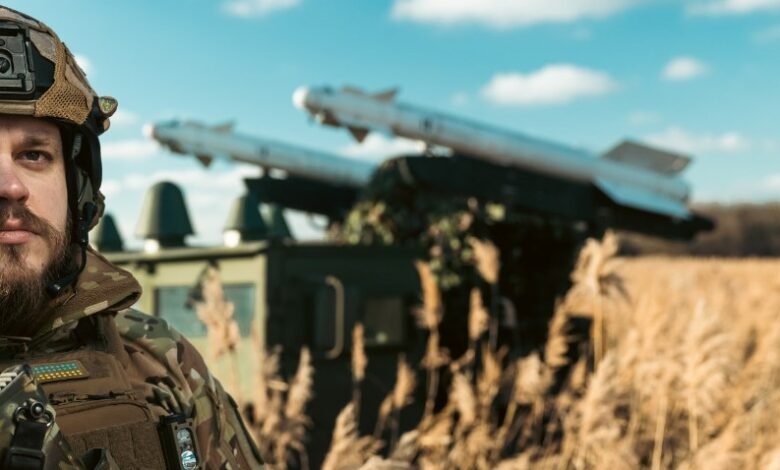
Troops on the ground use MANPADS, drone interceptors, and machine guns, plus other small arms. Experts said these tools work, but are sometimes not used as effectively as they could be, due to insufficient training, as well as doctrinal, organizational, or tactical decisions.
The senior master sergeant, who spoke on condition of anonymity, said that insufficiently-prepared troops don’t fully grasp the many nuances of their weapons, which the Russians are able to exploit if given the chance.
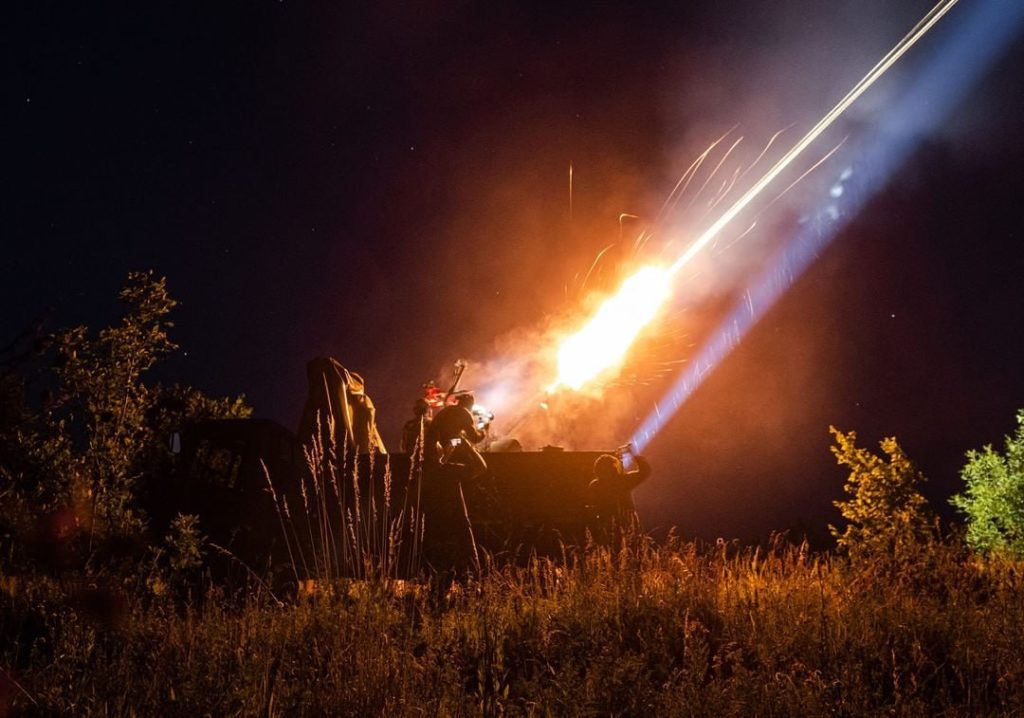
He added that teams are often deployed without considering best tactical practices, such as those calling for the creation of overlapping fields of fire. Finally, despite mobility being spelled out in their name, mobile fire teams often find themselves ordered to guard a limited location.
Kryvolap concurred that Russian reconnaissance has been able to map out where these teams are based around major cities. The Russians can use this to their advantage, either by flying around them, or causing these teams to waste ammunition by baiting out fire.
In addition to addressing these concerns, Kryvolap believes that light aircraft, possibly equipped with drone interceptors, could be a cheap and effective mobile response against massed drone strikes.
“The drone interceptor doesn’t have to waste energy to get off the ground, and from up there, you can see all the Shaheds,” he said.
Democratizing detection
Tight monopolies on radar systems also play a role. Ukraine has multifaceted sensor networks that can alert crews to the position of attack drones. But to actually hit a Shahed drone that’s flying over 200 kilometers per hour, even a second of latency can be too much.
Ukraine’s air defense uses a variety of short-range radar, from foreign-supplied systems, to the more common homegrown models including RADA, Giraffe, and the “Poltavka,” with typical ranges between 7 and 50 kilometers.
“There are very, very few of them,” said Lyuba Shipovich, head of Ukrainian NGO Dignitas. “When at the end of 2024 it became obvious that it is also cheaper to shoot down Shaheds with drones, and for this you need radar, then there were not many radar systems left.”
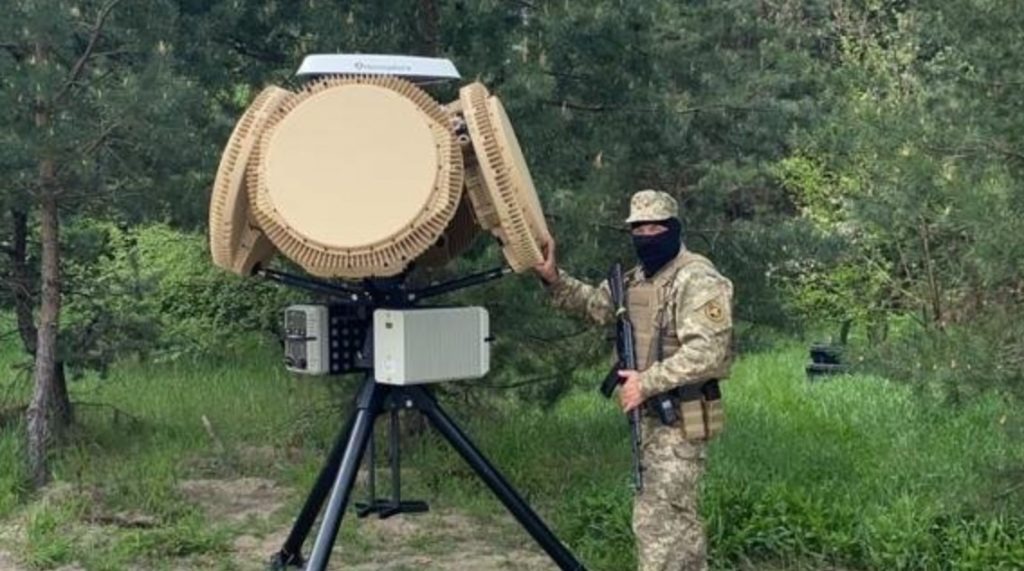
Experts said that one way to improve radar coverage might be to harness aerostatic balloons, which several companies in Ukraine already produce.
However, both the manufacture and use of radar systems is tightly controlled by the General Intelligence Directorate (GUR), due to the sensitive data these systems provide. This caution means that there are not enough radar systems to go around for all the air defense teams that might need them.
Multiple people who spoke to Euromaidan Press expect that getting the intelligence agencies to disrupt their standard operating procedures will be challenging.
Improving autonomy
This ties into how air defense is a “rigid vertical hierarchy that uses a single radar field as a source of information,” according to Kevliuk.
Decisions are made centrally. The time it takes for teams to open fire would have been enough to sweep the skies before the advent of drone warfare, but it doesn’t work as well for Russia’s swarm attacks.
“Air defense units lose seconds (sometimes minutes), which reduces the reactivity of the entire system, which becomes critical in conditions of massive, fleeting attacks,” Kevliuk said.
He went on to say that the interaction between air defense forces and electronic warfare forces, which don’t answer to the same branch of service, can stand to be improved. EW troops are “fundamental” in the fight against UAVs.
“There is a need to transition to network-centric air defense, when each air defense weapon must acquire the ability to act autonomously, according to its own logic, but receive information from a single information field, maintain communication with other weapons and sensors (radar), and open fire using their target designation,” he added.
Better training
In his announcement, Zelenskyy said that the military will change how frontline units are provisioned with drones, weapons, “and most importantly, personnel.”
“People are the key issue: training, as well as the actual replenishment of brigades,” the president wrote. “The Minister of Defense, together with the military command, are preparing appropriate solutions that will strengthen Ukraine and can solve existing problems.”
Improving training could be a great boon to Ukraine’s air defense capabilities. Only a day before the announcement, Taras Chmut, a Ukrainian veteran and head of the Come Back Alive fund, said that lack of training time prevents mobilized personnel from mastering air defense systems.
Improved training can also foster better teamwork and motivation, multiple experts told Euromaidan Press. Chmut said that motivation and readiness are prerequisites for being able to use air defense weapons to their fullest.
DeVore said that part of the challenge is for Ukrainian personnel to have to adapt to such an overwhelming number of new systems to work with.
“But that’s also a good side of the story, that there’s a huge number of cheap and innovative new systems,” he said.
(function(w,q){w[q]=w[q]||[];w[q].push([“_mgc.load”])})(window,”_mgq”);
Source link